HOW YOU CAN PASS OUR CRITICAL TESTS

One of the biggest anxieties our students face, whether prospective or currently enrolled, is the critical tests in the Complete Scoping Course.  There are three – the punctuation test, the software test, and the final transcript – and students can’t access the rest of the course without passing these tests.   That means that potentially a student has taken the leap, invested time and money in themselves and then can’t pass a test.  Then what?  Have you just paid close to $5,000 and spent hours and hours learning and that’s it?   That feels so overwhelming and scary, and we get it.  We’ve been there ourselves.   

So let’s talk about this.  Why do we have critical tests in the course?  How do we recommend that you prepare for them?   And what should you do if you fail? 

Why do we have critical tests in the Complete Scoping Course? 

Believe it or not, these tests are really for you, our students and potential scopist.  In our opinion there are two really big reasons why these tests benefit you: 

  • Testing ensures that Scoping International only produces the best scopists.  We feel very passionately about Scoping International’s reputation in the court reporting industry.  We want court reporters to see a Scoping International student and snatch them up before anyone can work with them.  We want our graduates to be the best of the best and have really profitable careers so that, when you start out professionally, you only have to say “I’m a Scoping International graduate” and you’re booked; you’re set.  This can only happen if we make sure that you truly understand and are applying what we teach you, and these tests, especially the final transcript, help us to see your caliber as a scopist and give you the feedback you need to become a successful scopist.   
    • Now, don’t panic if you’re about to tackle your final transcript.  We do NOT expect you to be perfect.  We will NOT fail you over one missed comma or any other one-off errors we find in your submission.  We are looking at the overall picture.  Overall, are you showing you understand when to shift from Q and A to colloquy?  Overall, are you showing that you understand and follow reporter preferences?  Overall, are you showing a grasp of grammar and are able to apply your knowledge to the verbatim record? 
  • The second reason is to help you face any fears you will experience when you are scoping professionally.  That feeling of clicking “Send” on a job and waiting for feedback does not go away once you complete our course.  In fact, those of us who have been scoping for years still feel that old anxiety popping up anytime we’re sending a job for the first time to a new client.  It’s scary!  What if they don’t like my work?  The testing process in the Complete Scoping Course allows you to confront that fear and get familiar with it.  It’s not a comfortable feeling, and we really understand that.  Unfortunately, that discomfort never really disappears, and this is a good opportunity for you to work through being uncomfortable and not let that stop you from achieving what you have set out to do. 

“Everything you want is on the other side of fear.” 

– Jack Canfield 

How does the faculty at Scoping International recommend that you prepare for the critical tests? 

We’re going to give you the scoop on how to pass our tests.  We’re doing this because we really, really want to see you succeed, and we want to give you all the tools you need to do so!  You still have to do the work, but we’ll make sure you know where to focus.  

Here’s a breakdown of each critical test and our top tips for preparing for each one: 

The punctuation test: 

  • Make sure you’ve done all of the worksheets provided in the course. 
  • Make a list of each section and subheading.   Note which sections you aren’t clear on and get more information.  Look up quizzes, go through blog posts on the subject.  If you’ve already invested in the resources recommended in this course, use those to work on firming up your understanding.   
  • Ask for tips and further explanations from your fellow students in the Facebook group. Ask for help at our drop-in sessions.   
  • Book a one-on-one coaching call with Coralie at hello@scopinginternational.com

The software test: 

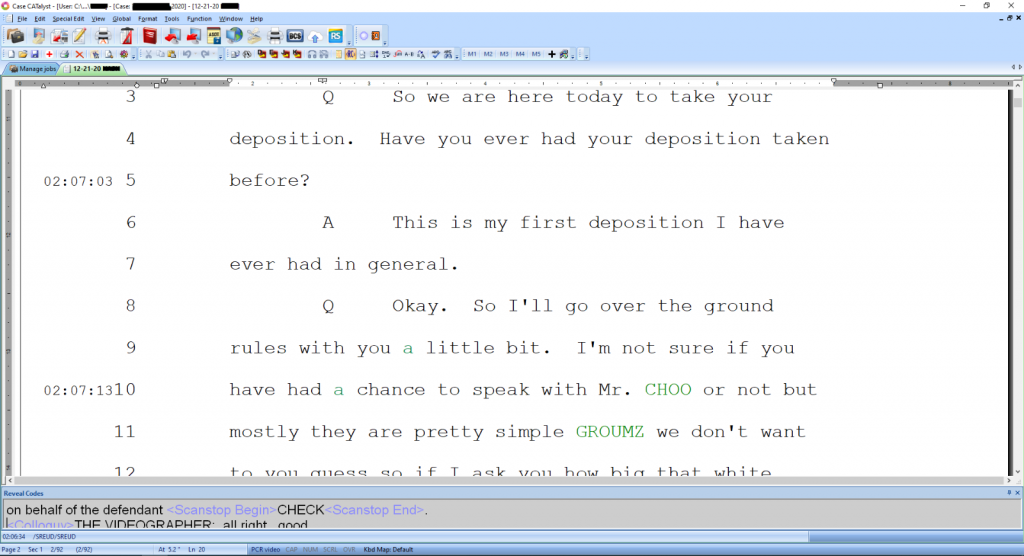
  • The biggest tip we have here is use the transcript that you download in the section to physically practice what you’re learning.  None of the concepts you’re studying will really stick until you’ve been applying them kinetically.  It’s okay if you completely “mess up” the practice transcript.   That’s the whole point of this – make your mistakes, figure things out.  This is a safe place to do that.  You can always close the transcript without saving your changes and you’ll have it back to its original form the next time you open it.  And the transcript is available to download as many times as you need to “play” with it.  So get in there, explore, make mistakes, learn from them, then take the test! 
  • Again, reach out to your fellow students in the Facebook group and ask them for suggestions and help and attend our drop-in sessions to ask your questions to one ?of the instructors. 
  • Book a one-on-one coaching session with Rachel at hello@scopinginternational.com

The final transcript: 

  • Do the practice transcripts.  I’m going to say it again because it’s simple but serious:  Do the practice transcripts.  Compare your version to the scoped version provided.  Notice grammar decisions, formatting decisions, make notes, and learn why those decisions were made.   When we are grading your final transcript, we can tell if you’ve utilized those practice transcripts or not.  So don’t cheat yourself.  Do the work. 
  • Pay very close attention to preferences when you’re doing the practice transcripts.  Learn to follow them closely.  Following preferences is one of the most important skills an excellent scopist has, and we pay attention to your ability to follow them when we grade the final. 
  • Follow the Scoping Recipe Card provided in Section 4.  Using this tool will help you to avoid the pitfalls both new and experienced scopists fall into. 

What should you do if you fail? 

“We are all failures – at least the best of us are.”  

– J.M. Barrie

Oh, the heart-sinking-into-your-stomach feeling you get when you see you’ve failed a test.  Trust me, all three of us course instructors are all too familiar with that horrible feeling.   We’ll share a little secret with you that we hope will give you hope.  Very nearly every student who has taken our critical tests have failed on the first try.  You are in the company of greatness.  It’s not about failing; it’s about not giving up.  So when you fail, after your heart has emerged from your stomach and returned to its proper place, take some time to think about the parts of the test that were difficult for you.  This is why we give you more than one chance.  We all need an opportunity to try again and room to grow and apply our lessons, and that’s what we are giving you.  

 We recommend writing down notes soon after failing a test so that you can capture what your biggest struggles are while they are fresh in your mind.  Then take a break.   Give your brain a rest and time to process.  Then go back and study the portions that you see you need more information on.  Again, attend drop-in sessions and ask for clarification on those points you’re struggling with or book a coaching call for a one-on-one conversation. 

Now while we do give you chances to retest, those chances are not limitless.   There are three chances to pass the punctuation section and the software training.  There are two chances to pass the final.   If you have used up all three chances, there is still hope.  You can pay a fee to take the test.  Every retest after that point will incur a fee.  And we strongly advise you to be taking full advantage of all of the resources we’ve mentioned many times in this post – drop-ins, coaching sessions, and the Facebook group – as you continue to study. 

Also, please remember that you have lifetime access to the information you’ve gained access to so far.  We are sure there is a reason this career appealed to you.  It may just be that you need to take more time, take a break and come back to it later.  You can come back a couple months later.  You can come back 10 years later.  It’s always yours.  And after that time, you may have gained the knowledge and skills you need to pass these tests.   

“It’s fine to celebrate success but it is more important to heed the lessons of failure.”

– Bill Gates 

The faculty at Scoping International truly wish you success in your scoping career, and we offer as much support as we can.  We hope this post has encouraged you to work through your fear, face and take those tests, and to calmly approach each setback or failure as a chance to learn.   

We look forward to seeing you at our future drop-ins and in our Facebook group with all of your questions! 

WHAT MAKES SCOPING INTERNATIONAL DIFFERENT FROM OTHER ONLINE SCOPING COURSES

So you’ve finally found a profession that you feel meets all of your requirements.  You’re a word nerd; you’ve always geeked out on legal dramas; you want the freedom to work wherever and whenever suits you; you want to earn a decent living being your own boss.  But which scoping training program should you choose? 

We want to show you what sets Scoping International apart and why you should choose us! 

You get the benefit of three instructors.  Here’s the thing, there are a wide variety of preferences in the court reporting industry.  We are the only online training course available that offers the benefit of multiple instructors.  Because there are three instructors who are actively working as scopists now, you get the most up-to-date and well-rounded education in scoping.  You learn about the different ways to do things in the industry, why they’re done differently, and gain the experience to find your ideal match in clients, ensuring success and satisfaction for both you as the scopist and for your future court reporting clients.  All three of the instructors have scoped for clients who live and work abroad and have or are living abroad themselves.  Each of us know how to get clients around the world and can teach you to do the same. 

In-depth and comprehensive training in grammar and software.  We believe that knowing how to spell correctly and punctuate the verbatim record is vital to being a good scopist, and we love the English language and are excited to teach you about the unique way we work with it in scoping.  But what really puts our scopists light years ahead of graduates from other programs is our in-depth and exclusive software training.  There are two reasons it is vital that a scopist know how to use the software:  Accuracy and profitability.  If you don’t know how to use the software completely and properly, you can create serious problems in the transcript and add hours of extra work for yourself, or worse, the court reporter.   And the software is a powerful tool that, when thoroughly understood, can help you to edit more accurately and more quickly.  And in this industry, speed is essential to profitability.  On average, our graduates are scoping 50% faster than graduates of other programs immediately upon graduation, helping them to earn more earlier on in their career.  

Lifetime access to the course.  As the industry changes, we adapt our content to keep up.  You can always come back to the course to get a refresher in grammar, software, finding clients, and editing tips. 

Our drop-in sessions.  We really believe this is one of the most valuable benefits to our course.  Every month, our students get free, live access to the instructors.  We answer any and all of your questions from grammar to formatting, addressing any uncertainties or insecurities you have as you enter your new career.  We also offer a breakout room to graduates where they can get one-on-one assistance from the instructors regarding all things business, how to get clients, any questions they have about client interactions, and tips for improving profitability. 

Private Facebook groups for students and graduates.  While this is a self-paced, online school, you’re by no means on your own.  Your fellow students and instructors are readily available to offer advice and support as you go through the course. 

Thorough and personalized marketing training.  Because you have multiple instructors, this is the only course that addresses the fact that there are different types of reporters and different types of scopists.  We teach you about the different reporters that are out there and help you learn what type of scopist you are, helping you to be confident and excited when getting your first court reporting clients. 

Need more convincing?  Book a time with Coralie, Heidi, or Rachel here:  hello@scopinginternational.com.  We are happy to answer any other questions you have as you consider making scoping your future career.  

WHAT IS SCOPING AND WHAT DO SCOPISTS DO?

Scopisits edit transcripts of legal court proceedings

We know how hard it is to find a work from home job that is fulfilling and can support a family these days. If you like working on your computer and having control of your workflow, perhaps scoping is the right career for you. We are excited to tell you more, so let’s dive right into what is scoping and what a scopist does.  

Scoping has been around for decades. It’s in demand, reliable, and can be more lucrative than other work from home occupations. No doubt, before landing on our website, you may have never heard of scoping before. So let’s break it down for you and give you details as to what a scopist does and what kind of skill set is required.

Scoping is the process of taking the raw transcript data from the court reporter and turning it into a polished transcript. The process of turning the rough transcript into a clean transcript may take a considerable amount of time, time that the court reporter may use to complete other stenography jobs or have a life! Instead, the verbatim recording is handed over to the scopist, who takes the time to ensure that the translated transcript is completed quickly, timely, and accurately returned as a scoped file to the client.

A scopist’s job is to assist the court reporter in the transcription process.

A scopist edits the transcripts of legal court proceedings created by court reporters. After a court reporter transcribes the proceedings from spoken word, a scopist formats the transcript, checks for accuracy, and edits grammar and punctuation. This partnership between the court reporter and the scopist allows the court reporter to take on more work and therefore make more money.  Since court reporting is in demand and projected to grow faster than the average occupation in the next 10 years, scopists will subsequently be in demand.

Here are a few skills a scopist needs:

  • Excellent grammar, punctuation, vocabulary, and research skills
  • Develop a good knowledge of legal terminology
  • Accurate typing skills 
  • Attention to detail
  • Ability to work on their own 
  • Be a self-starter
  • Good communicator, organized, open to feedback
  • Good problem-solving skills 

One of our founders, Coralie Östberg, found scoping when she was looking for a flexible work from home career.  She started out as a proofreader, then put some time in and acquired the skills necessary to become a scopist.  After six years of working as a proofreader and scopist, Coralie has this to say about her chosen career.

“I love scoping because I enjoy the challenge of working with the English language mixed with the nuances of dealing with a verbatim record. I also love what scoping has done for my life. I finally have a skill, one that has allowed my husband and I to travel to many countries, one that allows us to live in any country we choose, and now a skill that allows me to continue to work and be able to spend time with my daughter.”

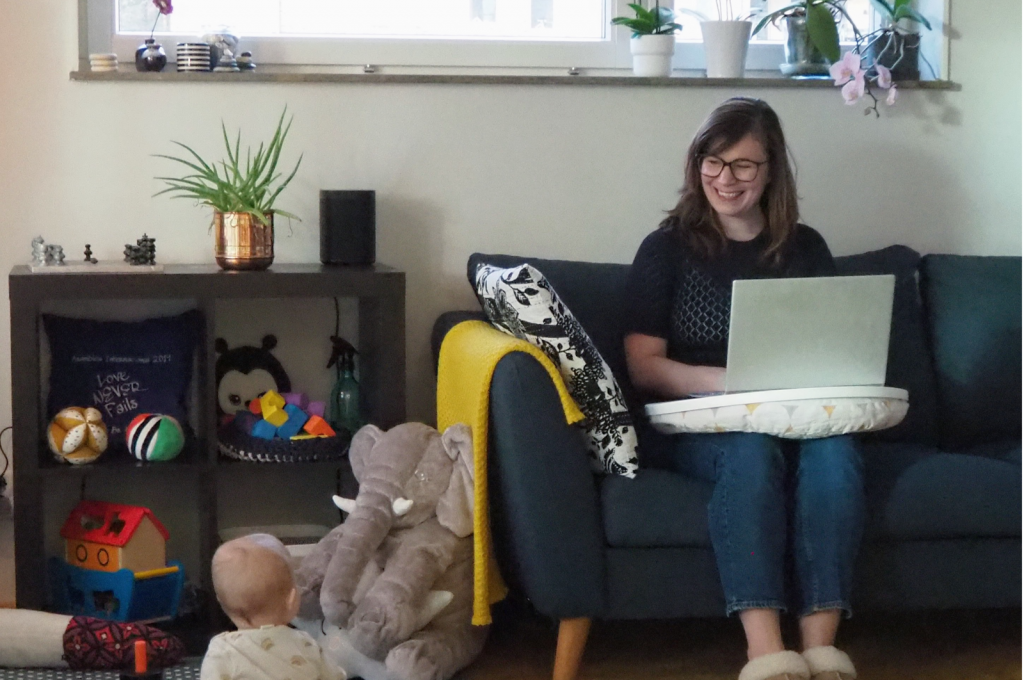
Scoping is a career that is flexible, in-demand, and satisfies the desires of any word nerd. Scoping can be done at home in your own little office, on your couch in front of the fire, or on a flight taking you to Bali for the winter. 

You can get started at absolutely no cost and see if scoping is right for you.

HOW DO WORK FROM HOME JOBS WORK?

Are you looking for a work from home job that has clients that are looking for you?

The year 2020 has been a year of upheaval and change. The pandemic pushed many employers into sending their employees to work from home. With phones, email, texting, Zoom, Google Hangout, Slack, and a plethora of other software to help coworkers work together remotely, the possibilities of working from home have skyrocketed. 

Maybe you are someone who was laid off from your job because it’s not possible to work from home and you’re sick and tired of job searching and going on interviews. You’d like to work from home but don’t know where to start or what to do. You’ve been researching and scouring the internet for days, maybe weeks and months even. But what job will actually suit your needs and be a success for you?

We’ve seen that many teachers have found themselves in a difficult position when returning to the classroom during the pandemic. That’s if they were able to do so. Teachers and support staff alike have had to reorganize and set up online classrooms. This has caused a lot of stress, and no doubt many have had to weigh the cost and benefits of returning to working with the public. It’s not uncommon to hear about women in the workplace making the difficult decision to stay at home with their children to homeschool. All these life-altering decisions that you’ve either made or have been imposed on you have led to a sort of mass pivot in the workplace. More and more are choosing to take control of their work-life and looking for options that will enable them to stay home and make a decent living.

So here we are at the end of 2020, and you might be finding yourself without any translatable skills, and you’re tempted to join an MLM company so you can have the freedom to stay home. It seems like many women are doing just that and attempting to live the influencer lifestyle. But did you know that the statistics show that your success rate is less than 1%? We know this from the income disclosure statements the companies post every year.

If you’ve been looking for work from home options, then probably you are being followed by ads everywhere you go. Facebook, Instagram, every website you visit with ads is showing you a new work from home idea. Have you seen ads for any of the following?

Work from anywhere as a scopist.
  • Make or design jewelry
  • Designing stickers
  • Etsy shop 
  • Affiliate marketing 
  • Amazon shop
  • Thrifting resale
  • Ask your current employer to work from home

You’re most likely reading this blog because you are still looking for the best option for you.

There is a lot involved in starting your own business from home and possibly even more needed to work in a more traditional office-type job for a big corporation from home. It can all be very scary with huge investments of time and money, but what if you could find a work from home job that has clients that are looking for you? If that appeals to you, then a career as a scopist might just be for you.

Scoping isn’t your typical work from home job. Most likely, before today, you hadn’t even heard of scoping or scopists. Court reporters hire scopists to make sure that the final court transcript is complete and accurate. Because there is a worldwide shortage of court reporters, the work for them is limitless and hiring a scopist frees them to take more reporting jobs instead of editing their own files. This keeps the work flowing for scopists. Scoping is a viable career with strong future growth. Most scopists work as freelancers, running their own business, deciding how much to work and where to work. They don’t even need to have an internet connection the entire time. 

If you’ve gone through the different options and decided you are ready to make a commitment to professional development, our scoping course is now available. It will teach you everything you need to know to start your career as a scopist, from technical skills to marketing and connecting with court reporters who need scoping services.

“Three years ago, I trained to be a scopist when I was searching for a career change from a government Monday to Friday, 9 to 5 job…I can truly say that scoping has given me the flexibility in my schedule that I had been dreaming of.”

-Heidi Yaeger, Cofounder, Scoping International

Visit our FAQ here to learn more detail about scoping. Next week on the blog we will go more in-depth about scoping and the day in the life of a scopist.